Laura Finucane, Library Assistant and Elizabeth Carney, Librarian, NHS Forth Valley
Contact: fv.forthvalleylibraryservices@nhs.scot
Where It All Began
After a weeding project left us with more space to work with in our library, we seized the chance to re-design the space. We saw an opportunity to engage patrons in this process, to ensure the re-designed space was informed by the people who use it.
In Spring 2025, we embarked on a feedback project and in this blog, we will describe what we did, what we found out, and how we have used this feedback to redesign our library with patrons in mind.
Leading From the Evidence Base
It was important to us that this project was evidence-based so we performed a literature search to identify publications on user surveys and user experience in library spaces (see list below).
Based on the literature, we decided to keep the aim of the project concise and specific. Instead of trying to do a full service review, we focused solely on the space this time. Also based on our reading, we decided to approach the project from two different angles:
- A short survey
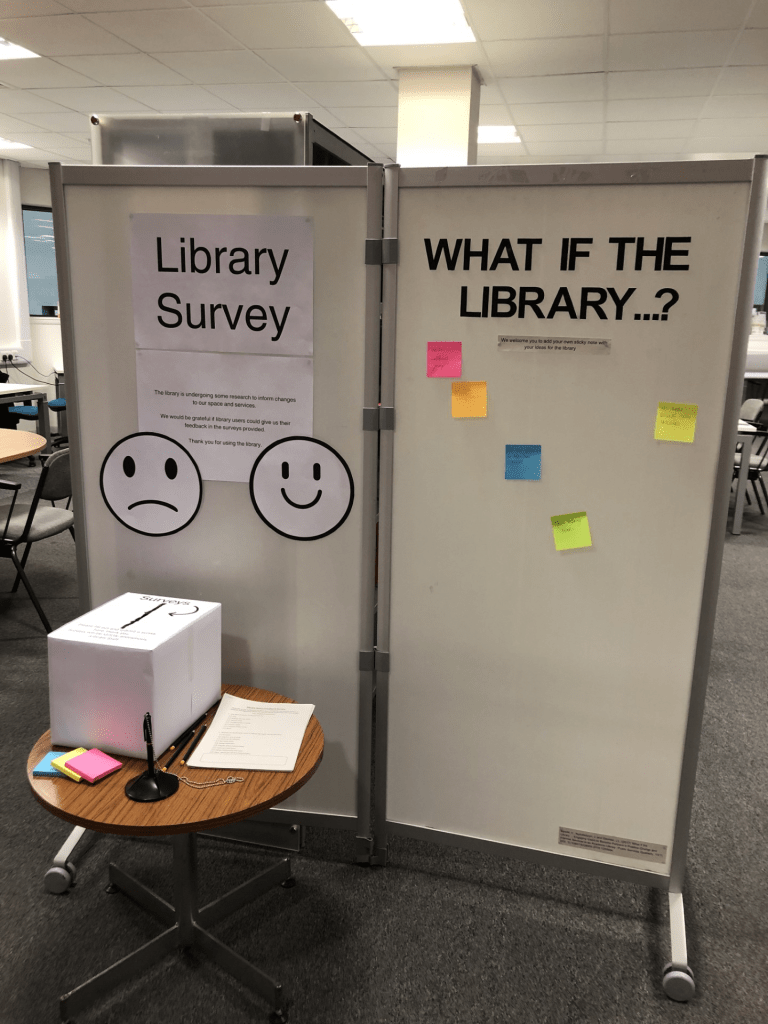
We developed a short survey, informed by examples from the literature, which asked a handful of quantitative questions about respondents’ use of the library, and then focused on two main qualitative questions: ‘tell us one thing you like about the library’ and ‘tell us one thing you would change about the library’.
The survey was available to compete online, and paper copies were also placed around the library. We received 95 responses in total and performed thematic analysis on the qualitative feedback to identify common themes.
- Staff observations
Along with collecting feedback from patrons, library staff performed head counting and made notes around how people were using the space, for example how often group working spaces were used, any times we reached capacity, etc.
What Patrons Love and Hate: Making Changes
The data provided us with rich insights into things the library was already doing well and things that could be done better with the library space. The major themes identified in the survey responses are described below.
Based on these themes, we created goals. Some have already been achieved, some are longer-term, and some are quite costly, so they are ‘wish list’ ideas for the future. We implemented simple solutions where possible and leveraged resources we already had available.
- Library as a Sanctuary
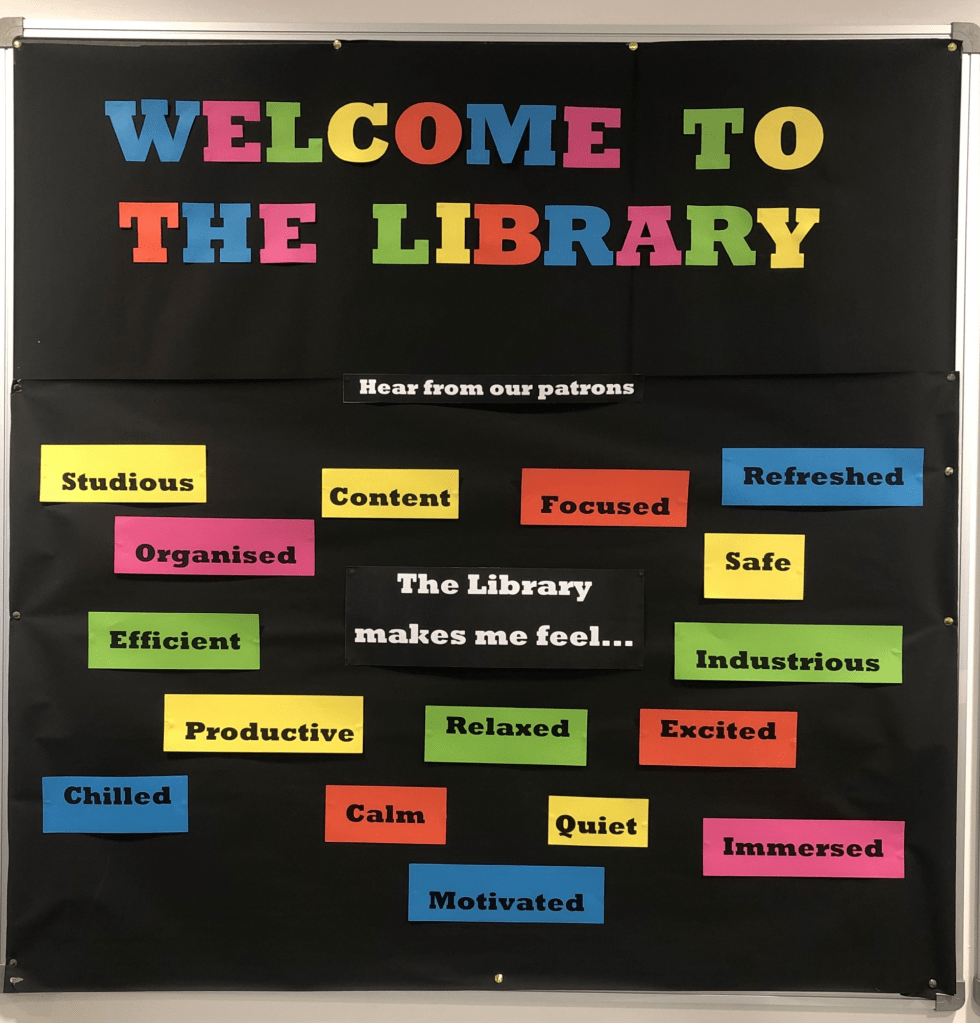
Many patrons valued the library as a safe, welcoming refuge. This was upheld by a variety of factors, including welcoming staff and a quiet and chilled atmosphere. Respondents also appreciated that the library provides a unique ‘third space’ within the busy hospital environment which they can use for multiple purposes such as working or taking a break.
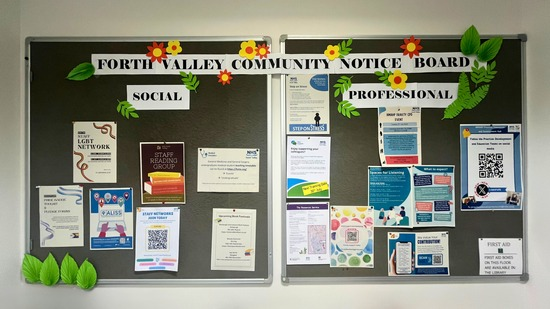
To nourish this quality, we have created a community notice board where staff can share news or advertise events. We have also strengthened our ties with the Wellbeing Team to promote our wellbeing offer. We are developing a library programme to tie in with themed calendar events and community initiatives, for example, World Book Night, bibliotherapy and staff groups.
- Staffing and Support
Respondents highlighted how much they valued library staff. Staff members were described as kind, approachable, and effective, providing “speedy”, “helpful”, and “excellent” support.
Some patrons mentioned that staff are not always present, given that the space is open 24/7. While respondents felt confident that staff are still accessible and responsive to out of hours patrons, we created an FAQ document to support patrons with common queries while no staff are present. We also designed a roving support initiative to invest in our approachable and effective customer service.
- Library Environment and Ergonomics
Environmental and ergonomic factors were the most hotly reported on in the survey responses. The positives highlighted were the 24/7 access and the quiet space.
A key lamentation was around set up of workstations, including a lack of ergonomic equipment. Privacy was another concern, for example working on PCs with sensitive information. There was an outcry for more plugs to facilitate work on personal devices and a strong sense of dissatisfaction around the temperature – the library is too hot!
Based on a professional ergonomics assessment of the library, we drew up a list of equipment for immediate and future purchase. We purchased some privacy screens to allow more comfort when working with sensitive information on PCs. With more space in the library, we rearranged desks so that more plugs are accessible. We have been persistent with reporting the high temperature to building management which has improved the issue. We also purchased standing and desk fans which can be moved around the space as desired.
The equipment purchased will be made available to borrow in an equipment lending library with hope for expansion in the future.
- Awareness of our Services and Resources
Many respondents made suggestions for new initiatives or services; many suggested services that the library already provides. This indicated a disconnect between library offerings and patron awareness. From the quantitative data, we could also see that certain library functions had lower usage than other services.
Both findings provided us with direction for library promotion. We have designed short, instructional signs with ‘how to’ information on library functions to place around workstations, and larger A3 posters to promote various services for notice boards in high traffic areas.
Summing It All Up
This project gave patrons a voice and sense of ownership over their library. We engaged with patrons more and, while we’re still working on several improvements, we’ve had a positive response to what we’ve done so far, with patrons telling us the space feels brighter and more welcoming. Since undertaking the work, we’ve also strengthened connections with other departments who have supported some changes, such as our ergonomics team, wellbeing team, and staff networks.
The biggest lesson we learned is to work with what you have. Thinking about how we can re-work our furniture and shelving, re-purpose resources, and draw on the expertise of colleagues, has helped us make improvements when funding is tight.
Finally, start small. If you can’t manage a whole service review, pick one area and focus on that. It can make the project more manageable, especially if you have a small team. Even small changes can make a big impact.
The Evidence Base
These articles informed the project and survey:
- Camacho, L., Wages, B. And Harris, T. (2020) ‘The Ultimate Survey: Asking One Question at a Time to Get Feedback from Library Users’, The Reference librarian 61(1). DOI:10.1080/02763877.2019.1642289.
- Dahan, S.M. et al. (2016) ‘Surveying Users’ Perception of Academic Library Services Quality: A Case Study in Universiti Malaysia Pahang(UMP) Library’, The Journal of academic librarianship, 42(1).DOI: 10.1016/j.acalib.2015.10.006.
- Del Bosque, D. et al. (2017) ‘Beyond awareness: improving outreach and marketing through user surveys’, Reference services review, 45(1). DOI: 10.1108/RSR-02-2016-0009.
- Frank, N.F. and Schrader, J. (2020) ‘Do They Really Know What They Need? Prototypes and Different Research Methods as a Means of Testing Students’ Feedback – A Case-Study’, The new review of academic librarianship, 26(2–4). DOI:10.1080/13614533.2020.1810080.
- Ippoliti, C., Nykolaiszyn, J. and German, J.L. (2017) ‘What if the Library … Engaging Users to BecomePartners in Positive Change and Improve Services in an Academic Library’, Public Services Quarterly, 13(1). DOI:10.1080/15228959.2016.1250694.
- Larsen, S.C. and Gibson, D.S. (2020) ‘Checking in with Your Document Delivery User Base: Creating, Implementing, and Learning from Client Satisfaction Surveys’, Medical reference services quarterly, 39(2). DOI:10.1080/02763869.2020.1741307.
- Miller, R.E. and Hinnant, K. (2016) ‘Seeking Meaning: Capturing Patron Experience Through a User Survey’, Journal of library administration, 56(5). DOI: 10.1080/01930826.2015.1105553.
- Scoulas, J.M., Carrillo, E. and Naru, L. (2021) ‘Assessing User Experience: Incorporating Student Voice in Libraries’ Pandemic Response’, Journal of library administration, 61(6). DOI:10.1080/01930826.2021.1947058.
- Scoulas, J.M., Carrillo, E. and Naru, L. (2022) ‘Pandemic-Era Administrative Decision-Making Informed by Patron and Employee Feedback’, Journal of library administration, 62(6). DOI:10.1080/01930826.2022.2102378.
- Valadi-khorram, S., Amiri, M.R. and Saberi, M.K. (2021) ‘Evaluating the quality of health information services in public libraries: an experience from Iran’, Library management, 42(3). DOI: 10.1108/LM-01-2020-0001.
- Zhai, X. and Wang, J. (2016) ‘Improving relations between users and libraries: a survey of Chinese academic libraries’, Electroniclibrary,34(4). DOI: 10.1108/EL-03-2015-0041.
 Health Libraries Group