Samantha Ratcliffe, Assistant Clinical Librarian, Lancashire Teaching Hospitals; Louisa Halton, Senior Library Assistant, Lancashire Teaching Hospitals and Niamh Tierney, Library Assistant, Lancashire Teaching Hospitals
At Lancashire Teaching Hospitals, three of us in the team came together to plan an event for Green Libraries Week 2025. We are all working towards our chartership or certification and this felt like the perfect opportunity to work on a project together and bring different skills to the table.
At the start of our Chartership journey, there were times when the process felt overwhelming. Translating day-to-day work into meaningful evidence wasn’t straightforward and we quickly realised we would benefit from supporting each other. Working collaboratively gave us space to share ideas, spark creativity, and build confidence. It also provided a live example of how joint projects can map directly to the PKSB and strengthen professional practice.
We chose to create an event for CILIP’s Green Libraries Week. Although the campaign is often associated with public libraries, taking part allowed us to connect with the wider profession and highlight the role NHS libraries play in sustainability. It also offered a ready-made national platform with themes, resources, and marketing materials that we could adapt for our context.
The project aligned closely with our Trust’s Green Plan. Lancashire Teaching Hospitals NHS Foundation Trust is already progressing sustainable initiatives such as the travel plan and a re-use scheme. While the library isn’t currently a priority area, we saw an opportunity to contribute early and visibly.
Raising awareness, our own and our users’, was another key motivation. We wanted to explore the connection between environmental responsibility, health, and wellbeing, while encouraging simple everyday eco-actions. Green Libraries Week gave us a platform to showcase our sustainability-related collections, support the NHS Net Zero agenda, and reinforce the library’s role as a hub for knowledge and organisational values. We also hoped it would boost engagement with our resources!
We formed a small working group to decide on a plan of action and to help formulate ideas and share experiences. We completed the Trust’s sustainability e-learning module and read our Trust’s Green Plan to inform what we wanted to do and to give us greater awareness of our Trust’s strategy. In the end we decided on a month-long campaign as Green Libraries week coincided with half term and we knew that it would be a quieter time in the library as staff and users would be on leave.
We decided on the theme ‘Borrow, don’t buy’ to inform users about the sustainable nature of libraries – the borrowing and sharing of resources, instead of buying to help reduce waste and help the impact on the climate. We also wanted to promote access to reliable information using our sustainability book collection and a literature search undertaken by the librarian in our working group. We also wanted to link in with Public Libraries and help publicise their services and their digital offers.
From reviewing our Trust’s Green plan, we took aspects of the plan and created a bingo card as a monthly sustainability challenge. The idea being that users could pick up and tick off activities over the month to help promote sustainability and small ideas for change linking in with CILIP’s theme ‘Seeds of Change’. For example, one aspect of the Green Plan is sustainable travel, so one of the bingo squares was ‘took public transport’ and another was ‘used the stairs.’
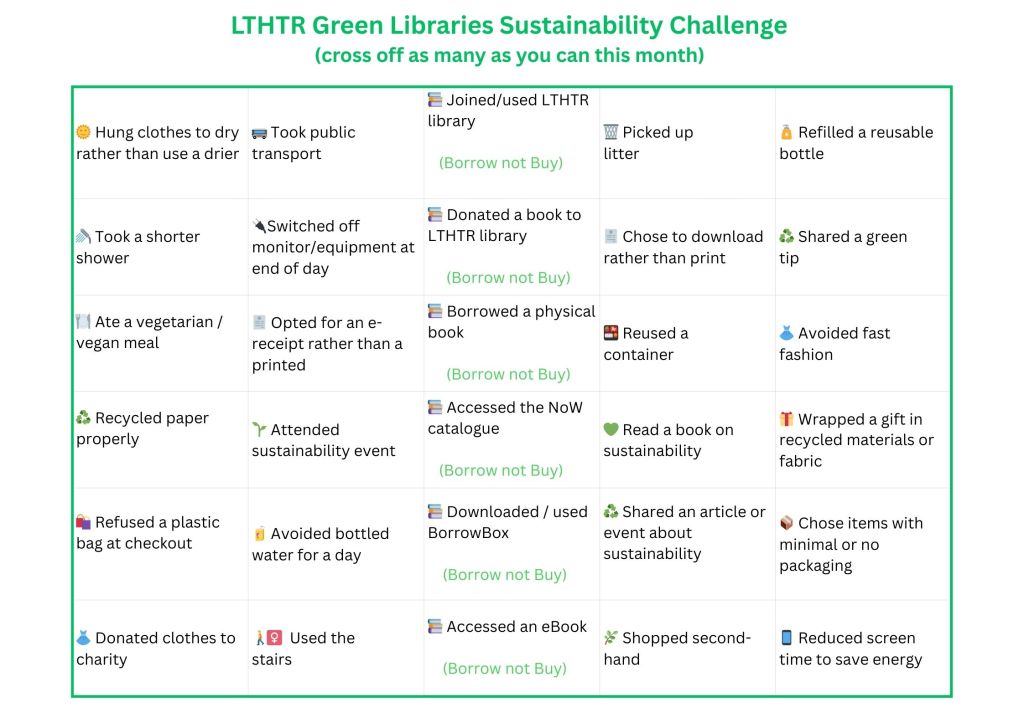
We organised a two-hour event in our Trust’s main canteen to promote the campaign. This was held the week before Green Libraries Week on the 22nd of October due to leave. We held a tombola using recycled items like old books, pencils, and notepads. To take part in the tombola we encouraged people to make a green pledge. The pledges could either be from the bingo card or one of their own. We used the opportunity to discuss sustainable practices, promote the Trust’s Green plan and the Trust’s e-learning module as well as all the benefits of joining the library, either the Trust’s library or a local public library!

We created displays in each library and put the pledges on the displays after the event. The displays held useful information about the library and sustainability. It highlighted the reciprocal borrowing scheme we have with local NHS libraries linking to the theme ‘borrow don’t buy’ and we showcased our sustainability books and resources from the Public Library to help promote their services. We promoted Green Libraries Week on social media and on our Trust Communications bulletin and made links with the sustainability team to advertise to their sustainable champions.

Outcome
The tombola drew people into the stall at the event which gave us an opportunity to engage with them about sustainability and libraries – we spoke to 41 people and had several members of staff sign up to join the library. We gave out bookmarks and signposted to our local public library services and promoted the Trust’s Green Plan and advertised how they could get involved with sustainability at the Trust through becoming a sustainability champion. Several books from the sustainability collection were issued from the displays in the library.
What did we learn
We found that working collaboratively helped as we could bounce ideas off each other; each member of the team could focus on a specific aspect of the campaign at the event. At the event we spoke about a lot of different things, at times this felt a lot to fit in, but we did tailor responses to the people we spoke to – so it was useful to have three staff there to handle enquires and to give out information.
Tapping into national and local campaigns and themed weeks is useful for the library service. It helps libraries get noticed and builds credibility by showing we are a part of a wider movement. We made connections within the Trust and wider area too; it also let customers know about other resources available outside the hospital library. The campaign also helped us engage with people which we hadn’t spoken to before!
Tombolas work as a promotional tool. It was something that customers could interact with it helped gain their attention and helped start conversations. We did have to explain what a tombola was to some customers so that is something to be aware of, not everyone knows what a tombola is!
Members from the sustainability department were meant to come on the day but they didn’t which we feel was a missed opportunity.
We felt that the event got people thinking about what they currently do, and what they can do about sustainability. We wanted to make people aware of sustainability, the borrow don’t buy aspect and the key theme of green living – even if we made one person think differently e.g. choosing a vegan meal, borrowing a book, was a success to us.
The project helped us meet broader Chartership criteria. It strengthened our personal development, demonstrated awareness of organisational context, and connected us with the wider library and information sector. By engaging with Trust initiatives, public libraries, and a national campaign, we were able to evidence a well-rounded, outward-facing professional contribution.
 Health Libraries Group