Anima Ray, Library, Knowledge and Education Centre Administrator, West Hertfordshire Teaching Hospitals NHS Trust
Shadowing at the House of Commons Library
On 30th September 2025, I had the rare chance to shadow Linda Coombs, Head of the Members’ Library, House of Commons. It was a fascinating experience that gave me insight into one of the UK’s leading research services. The visit helped me better understand the wider professional context of my registration and how parliamentary research connects with the broader library and information sector.
Shadowing at the House of Commons Library was a valuable and thought-provoking experience that deepened my understanding of parliamentary information services and broadened my perspective on how library and research functions operate in a high-profile, policy-driven environment. As NHS librarians, we often work in busy settings where accurate and timely information can affect patient care. Shadowing the Head of the Commons Library gave me a new view of how the same values apply in Parliament. Like in healthcare, decisions rely on trusted evidence, and librarians play a key role in making that possible. The visit showed how both sectors value clear information, trust, and quick support.
One aspect that really stood out was the warm and informative welcome I received at reception. The Head of the House of Commons Library gave an introduction that went beyond the library itself, offering a brief overview of both the House of Commons and the House of Lords. This introduction helped clarify the library’s function and its contribution to parliamentary work. More importantly, the welcome created a sense of comfort and enthusiasm that made me feel instantly engaged. It highlighted the value of a well-planned orientation and has inspired me to think about how we can structure future shadowing opportunities more thoughtfully within our own organisation.
The physical layout of the library is carefully designed to create a calm and open environment. Bookshelves are placed around the edges of the room, keeping the centre clear and uncluttered. The walls are free from excessive signage or visual distractions, which adds to the clean and peaceful feel. Tables and chairs are arranged centrally, allowing flexible use of the space. Importantly, the windows remain unobstructed, letting in natural light and offering views outside. This thoughtful setup contributes to a welcoming atmosphere. Members have expressed appreciation for the quiet space, which reinforces the importance of creating environments that support focused work and wellbeing.
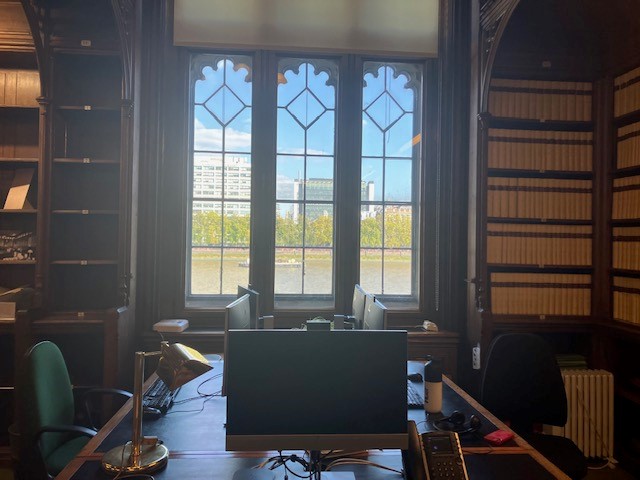
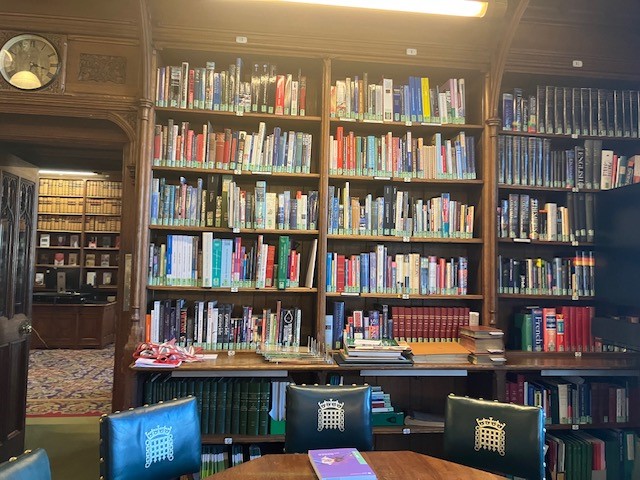
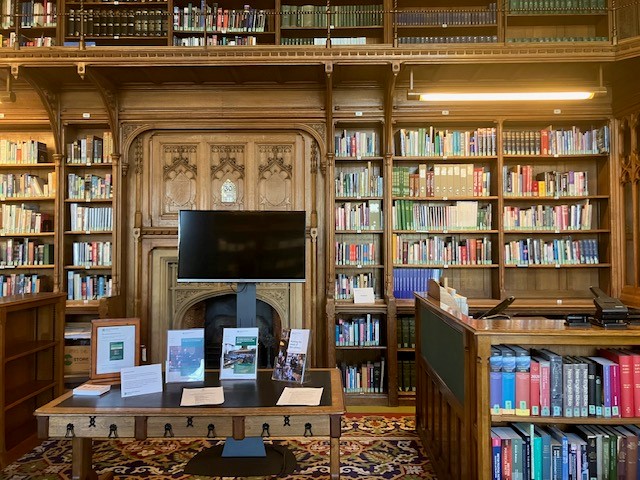
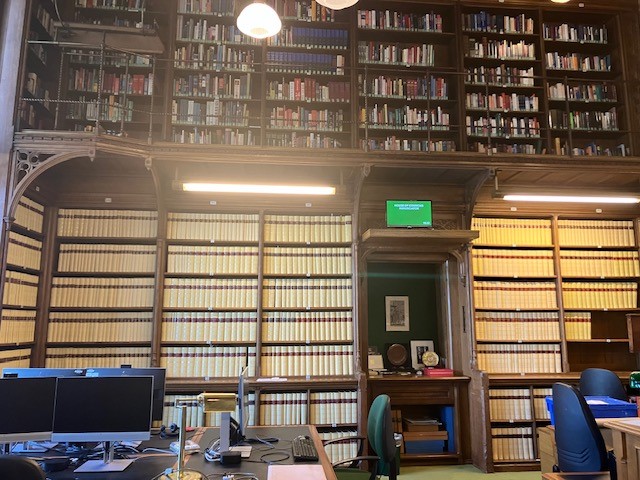


I was impressed by the scale of their collections, which include both reference and borrowable books. MPs and their staff automatically become members and receive a library card as part of their welcome pack when joining the House of Commons. The loan period is similar to ours in the NHS, but overdue fines are only applied if an item is lost. Their approach to collection management involves minimal weeding, reflecting the long-term relevance of much of their material and the need to preserve historical context.
Operationally, their systems differ in many key ways. Communication is streamlined so users receive only automated messages. Their model includes specialised teams for subject areas, dedicated statisticians, and a structured query logging system that ensures each request is allocated to the right person. Their research alerts are set up for every member by default, with the option to unsubscribe. This proactive approach contrasts with our more reactive model in NHS libraries and has inspired me to explore similar anticipatory services.
I was particularly interested in their “Good Information Toolkit,” which reframes information literacy in a more accessible and empowering way. This positive language shift has encouraged me to rethink how we present learning resources to our users.
Their communications team tracks impact using a platform-like system that logs every engagement. Unlike our literature search service, their replies must include clear findings. They also write a wide range of evidence-based briefings and blogs to support the work of Parliament.
While there are some similarities to our setup, like treating staff as users who are automatically members, their systems work quite differently. Seeing this helped me reflect on how we do things in NHS libraries and gave me ideas to explore.
 Health Libraries Group