Lesley Huss, Librarian, Birmingham Community Healthcare NHS Foundation Trust
Background
In October 2023, our Trust’s brain injury unit asked if we would take one of their patients for work experience. Following a stroke aged 25, this lady had undergone several years of rehabilitation and wanted to rebuild her confidence in the workplace. Patients have come to the library for a few weeks’ work experience before, so as usual we came up with a varied programme of library tasks.
However, just before her start date we discovered she was no longer a patient here. This meant she would be an external volunteer, and different Trust policies applied; in particular, she could not do anything that would normally be done by paid staff. Stamping books, registering users, and shelf-tidying were all out. We had to come up with a completely new project.
Solution
After much thought, we came up with the idea of creating a special collection for brain injury survivors. Our volunteer would identify resources, the collection would be funded by the Trust charity and accommodated in the library, and we would work together on publicity.
What had felt like an intractable problem was now an exciting opportunity:
- The books would be more relevant and useful than if selected by library staff – we would benefit from our volunteer’s lived experience
- It was something we would not otherwise have the resources to do
- It would support our aim of increasing patient use of the library
The process
Our initial plan was to create a small collection of books relevant to brain injury survivors, so we discussed how to identify books, and agreed on relevant additional criteria. Our volunteer agreed that UK-published would be best; based on her own experience, books from other countries tended to recommend services unavailable here.
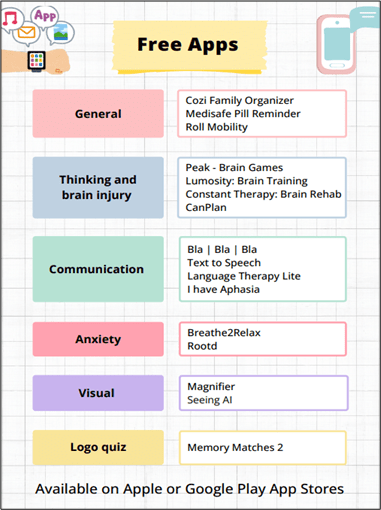
Once she began the work, however, she also started finding relevant websites and other online resources. It quickly became clear it would be useful to point to these as well. At first this was just a text-based list, then she added book covers for visual interest. For accessibility it needed to be even more visual, so she met with the library’s promotions lead. Together they created the resource guide using Canva – this made it possible to improve the layout, incorporating information boxes and more graphics.
Display
We arranged the books and copies of the resource guide on our allocated shelves. Our volunteer identified that we needed pictures and brighter colours for the display, so we found items of clip art that she was happy with and that were licensed for re-use and chose a more vibrant colour for the signs.
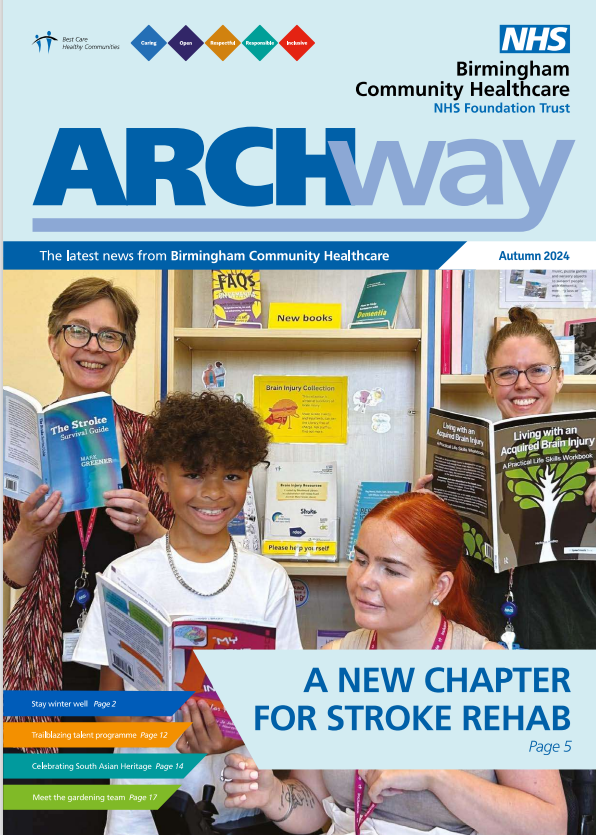
The collection was finally launched in June 2024. It has been well-received by both patients and staff, with one of the clinical psychologists from the inpatient neuro-rehabilitation unit describing it as “a great initiative.” It has also led to good publicity for the library: a full-page feature article in our external Trust newsletter, an item in the staff e-bulletin, and posters advertising the collection have been put up around the hospital.

 Health Libraries Group