Daniel Park, Library and Knowledge Services Manager, The Rotherham NHS Foundation Trust
Not wanting to leave all the fun to gentlemen sporting impressive moustaches (Movember), NHS England instituted an event called ‘Knowvember’ some years ago where hospital libraries try and get staff to share the benefit of their experience through various activities.
Not sure where to start, I attended NHS England’s Knowvember webinar on ‘fishbowl’ conversation exercises – here, staff sit in a circle surrounded by others, discussing a hot topic, and then swap around where someone in the audience has something they want to say.
The main issue that I struggled with was finding a topic hot enough to unite everyone in the discussion. Feeling dejected, I resigned myself to another Knowvember-free year.
But although (K)November was nearly over, I was already preparing for January’s Health Information Week, and the fishbowl conversation floated buoyantly on my mind – luckily, one of the topics for this year’s HIW was ‘Winter health’, which may be the opposite of a hot topic but had the capacity to unite most clinical specialties.
Taking advice from an urgent care consultant, I opted for a ‘random patient generator’ approach, whereby a fictitious individual with conditions brought on by winter weather is discussed, and then the conditions or the age, gender, and family circumstances of the individual are swapped around, a little like one of those children’s picture books, to stimulate conversation still further (read more on the heads, bodies, legs game here).
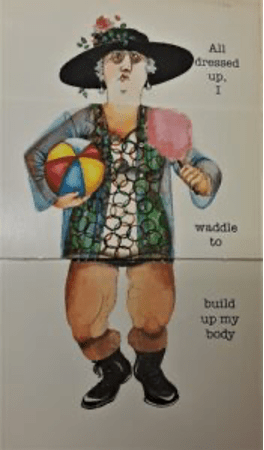
The next task was to approach people from every specialty in the hospital – with time on my side, I was even able to attract people from the housebound library service and Age Concern.
Although I’d booked the lecture theatre for the event, the venue wasn’t exactly conducive to a fishbowl exercise because there was only a podium microphone and people could attend online. Not having hand-held microphones to pass around, the consultant and I managed to cobble together some leftover builders’ materials (sponge and plastic piping) to create something that looked the part out of some cheap lapel microphones.
On the day, the winter health conversation proved a success, with over fifty people attending, writing rave reviews on their feedback forms and demanding we hold more events like this.
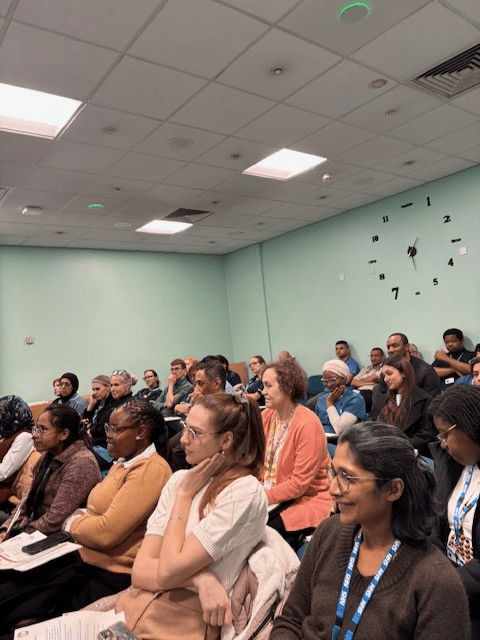
Of course, it didn’t go completely smoothly, and there are learning points from the event I would like to share:
- Be prepared for people to duck out at the last minute. Hospital staff get busy at short notice and your cherished star speaker may not appear – make sure you have plenty of backups.
- A circle of chairs is intimidating. I couldn’t get people to sit in the ‘fishbowl’ – instead, they used the space as a kind of impromptu stage where they got up from the audience to say their piece.
- If the topic isn’t stimulating discussion despite a healthy pause, then choose another – the kaleidoscope nature of the random patient generator was very good at facilitating this.
Did the event succeed in mobilising knowledge? The feedback seemed positive, but even if I couldn’t track the benefit for every individual who attended, I gained an improved relationship with our public library service. At the time, we were downsizing our patient library (which I’ll discuss at the ICML conference this July) and a lot of fiction and popular non-fiction was given a new lease of life by our colleagues in the public sector, thanks to the networking that came from this event.

